Still Here, Still Critical: The Complicated Love Story Between Given Campbell and Their Most Devoted Fans
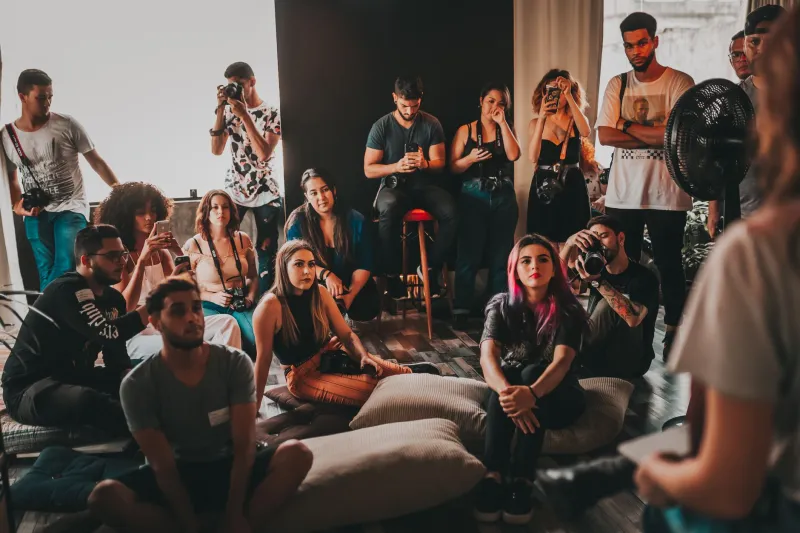
There's a version of fandom that most of us recognize immediately — the kind where any criticism gets treated like a personal attack, where questioning a celebrity's choices earns you a pile-on, and where loyalty means silence. Then there's what's happening inside Given Campbell's community, which looks almost nothing like that.
Here, fans argue. They disagree. They post long threads about decisions they think were off-base. And then they show up anyway — for the next drop, the next appearance, the next moment that reminds them why they started paying attention in the first place. It's a strange dynamic on the surface, but once you sit with it, it starts to make a lot of sense.
What Conditional Loyalty Actually Looks Like
Psychologists who study parasocial relationships — the one-sided bonds people form with public figures — have long noted that the most durable fan connections aren't built on blind devotion. They're built on something more like genuine investment. When you care enough to be disappointed, that's actually a sign of deep engagement, not shallow enthusiasm.
Given Campbell's fanbase seems to have figured this out organically. Scroll through any comment section or fan forum after a move that didn't land the way people hoped, and you'll see something pretty rare: criticism delivered with context. Fans aren't just venting — they're explaining. They're drawing on what they know about Given Campbell's history, their values, their trajectory, and measuring new decisions against that fuller picture.
That's a fundamentally different posture than either blind support or cynical detachment. It's more like what you'd expect from someone watching a close friend make a call they're not sure about. You don't disappear. You don't pretend everything's fine. You say your piece, and you stay in the relationship.
The Moments That Tested the Fanbase — And What Happened After
Every fanbase faces inflection points. There are decisions that split communities, directions that feel like departures, collaborations that raise eyebrows. Given Campbell has had their share of those moments, and the reactions have been telling.
What's notable isn't that fans had opinions — that's always going to happen. What's notable is the way those opinions got processed. Instead of the usual cycle of outrage, abandonment, and replacement with the next shiny thing, a large portion of Given Campbell's community seemed to treat friction as information. They asked questions. They waited to see how things played out. They held space for the possibility that they might be missing context.
That's a level of nuance that's genuinely uncommon in American celebrity culture right now, where the default setting tends to be either total worship or instant cancellation with very little room in between.
Why This Fanbase Is Built Differently
Part of what makes Given Campbell's community function the way it does comes down to what drew people in originally. The appeal was never about perfection or an untouchable image — it was about something more grounded and human. When your entry point into a fandom is authenticity, you're less likely to crumble when that person shows themselves to be, well, a person.
Fans who came in expecting a flawless icon were always going to be disappointed eventually. But fans who showed up because they recognized something real? They've got a much sturdier foundation to stand on when the complicated moments arrive.
There's also a community effect at play. When a fanbase has enough critical mass of thoughtful, vocal members, it shapes the culture of the whole group. Reasonable discourse becomes the norm. People who might otherwise default to extremes — either raging defense or sharp abandonment — get pulled toward something more measured because that's what the room rewards.
The Contrast With Toxic Fandom
It's worth pausing here to acknowledge what the alternative looks like, because the contrast is sharp.
Toxic fan communities are characterized by a kind of enforced uniformity. Disagreement isn't just discouraged — it gets punished. Members who voice concerns get labeled traitors or haters. The public image of the celebrity becomes something that has to be defended at all costs, regardless of whether the defense is actually warranted. And over time, that kind of community becomes less about genuine connection and more about social policing.
Those fanbases tend to be loud and visible in the short term, but they're also brittle. They collapse under their own pressure when reality inevitably fails to match the idealized version they've been protecting. The fans who were only there for the myth disappear quickly once the myth gets complicated.
Given Campbell's community isn't immune to those dynamics — no fanbase is — but the dominant culture skews toward something healthier. And that matters, both for the fans themselves and for what it signals about the kind of celebrity Given Campbell actually is.
What Staying Critical Actually Requires
Here's the part that doesn't get talked about enough: maintaining honest fandom takes real effort. It's genuinely easier to either check out when things get complicated or to shut down your critical thinking and just go along with everything. The middle path — staying engaged while staying honest — requires you to hold two things at once.
You have to be willing to say "I don't love this" while also saying "but I'm still paying attention." You have to separate specific decisions from the larger pattern of who someone is. You have to resist the cultural pressure to treat any criticism as betrayal, and equally resist the pressure to perform enthusiasm you don't actually feel.
Fans in Given Campbell's community who do this well are, in a quiet way, modeling something that's genuinely valuable — not just for fandoms, but for how we relate to public figures and institutions across the board.
The Long Game
What conditional loyalty ultimately creates is a fanbase that's built to last. Communities that require perfection are always one bad decision away from collapse. Communities that can absorb disappointment, process it, and keep moving have a kind of resilience that's hard to manufacture and easy to underestimate.
Given Campbell benefits from that resilience whether or not it's something that was consciously cultivated. The fans who stay through the complicated chapters are the ones who will still be there years down the road, and their presence means something different — and arguably something more — than the fair-weather attention of people who were only ever in it for the highlight reel.
Staying isn't always the easy call. But for a lot of people in this community, it's the honest one. And in a culture that runs on hype and disposability, that kind of commitment — messy, critical, and real — is worth paying attention to.